Blind Spot Mirrors: Where to Place Them and How to Adjust Them
The car you cannot see is the dangerous one. Here is how to cover the gap — in the right order.
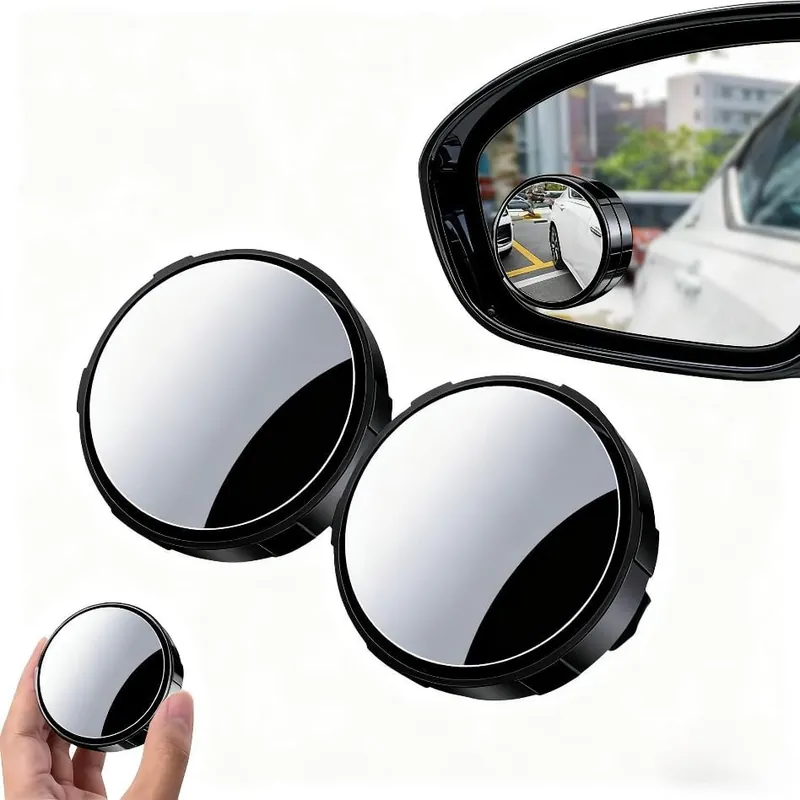
What a blind spot really is
Your side mirrors show what is behind you and part of what is beside you. Between the edge of the mirror's view and the corner of your eye, there is a wedge of road neither one covers. A whole car fits in that wedge — and it sits there exactly when you decide to change lanes. A small convex mirror widens the view so the hidden car shows up in the glass instead of surprising you.
Step 1 — Adjust your main mirrors first
Most drivers set their side mirrors so they mostly see the side of their own car. That wastes half the glass. The method driving instructors teach instead:
Driver side: lean your head until it almost touches the driver window, then adjust the mirror until you can just barely see the rear corner of your car at the inside edge.
Passenger side: lean your head toward the center console, then adjust the same way — just a sliver of your car visible at the inside edge.
Sitting normally again, the mirrors now point at the lanes beside you instead of at your own doors. The blind spot shrinks before you add anything.
Step 2 — Place the small mirror on the outer edge
Stick the convex mirror on the outer edge of the side mirror — most drivers pick the outer lower or outer upper corner. Two rules decide the exact spot:
1. It must show the lane beside you plus a thin sliver of your own car's side, so your brain knows where the image sits.
2. It must leave most of the main mirror free — the small mirror is the supplement, not the replacement.
Clean the glass, press the mirror on firmly, and you are done — no tools, a few seconds per side.
Blind-Spot Car Mirrors – 360° Adjustable
$9.99 · 2-pack
Stick-on convex mirrors you can angle a full 360° after fitting, so the placement is easy to fine-tune. Fits most cars, trucks and SUVs.
See the mirrorsFREE delivery · Ships in 3 business days
Step 3 — The parking-lot test
Park, and ask someone to walk slowly around the car at roughly one lane's distance — or park beside another car and study the handoff. Watch the walker move from your rear view, into the side mirror, into the small convex mirror, and then into your side vision. There should be no moment where they disappear completely. If a gap remains, nudge the angle of the small mirror — that is what the 360° adjustment is for.
Common mistakes
Placing it in the middle of the mirror. It blocks the main view you still need. Outer edge, always.
Skipping the shoulder check. Mirrors shrink the blind spot; the quick glance before a lane change is still the habit that keeps you safe.
Never re-checking the angle. Car washes and bumps happen. A two-second glance during your parking-lot routine each month keeps the coverage honest.
Questions drivers ask
Where is the best place to stick a blind spot mirror?
On the outer edge of your side mirror — most drivers use the outer lower or outer upper corner. It should show the lane beside you plus a thin sliver of your own car's side as a reference, while leaving most of the main mirror free.
Do blind spot mirrors replace the shoulder check?
No. They shrink the blind spot and make the hidden car visible earlier, but a quick shoulder check before changing lanes is still the safe habit.
Do stick-on blind spot mirrors fit trucks and SUVs?
Yes — small convex stick-on mirrors fit most cars, trucks and SUVs. They attach to the flat glass of the side mirror in seconds, with no tools.